SAL
Ceramics
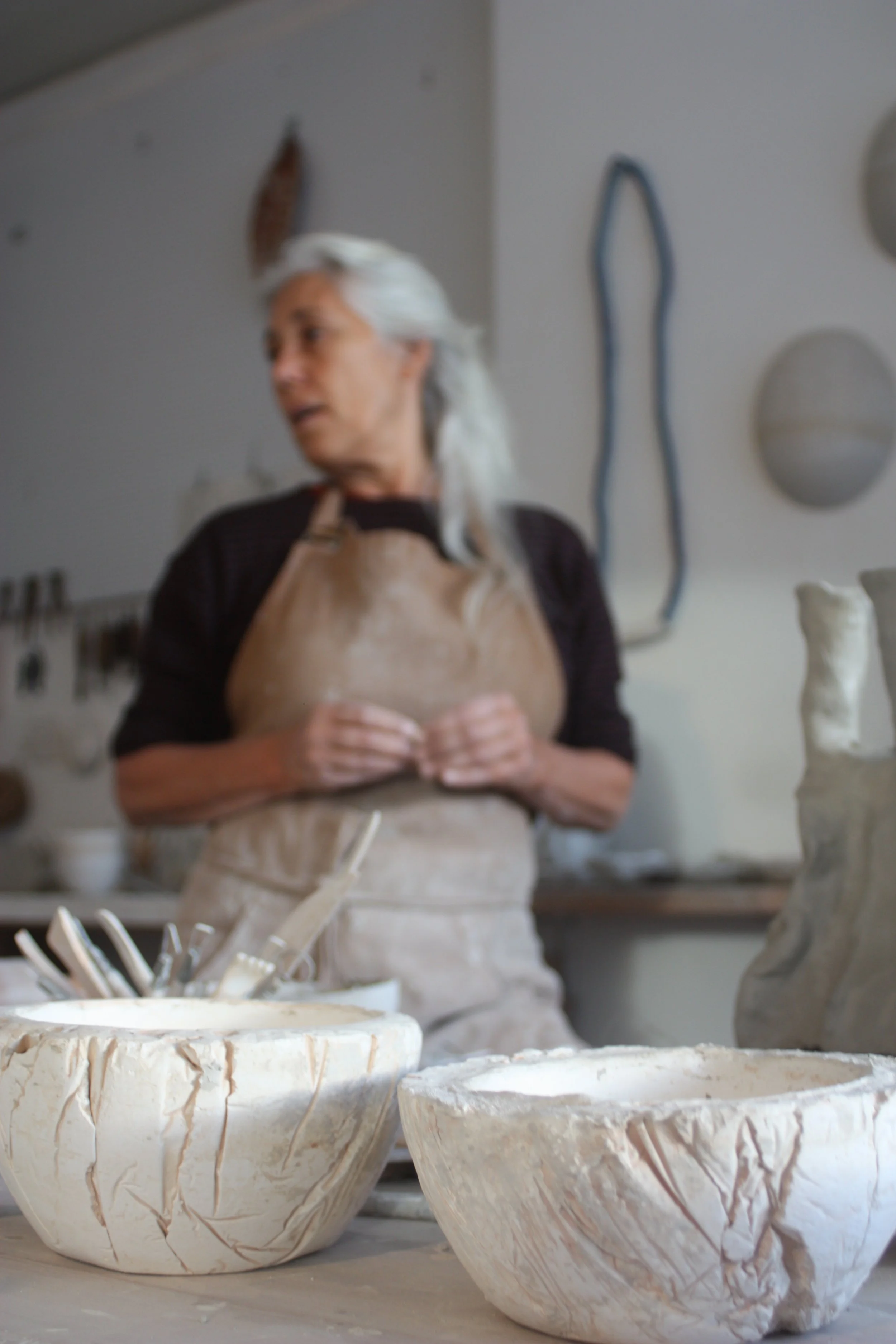
Sofia Albuquerque is a visual artist from Lisbon who has worked in ceramics since 2010. Her work focuses primarily on creating utilitarian and decorative objects inspired by nature, the sea, the earth, and the plant world.
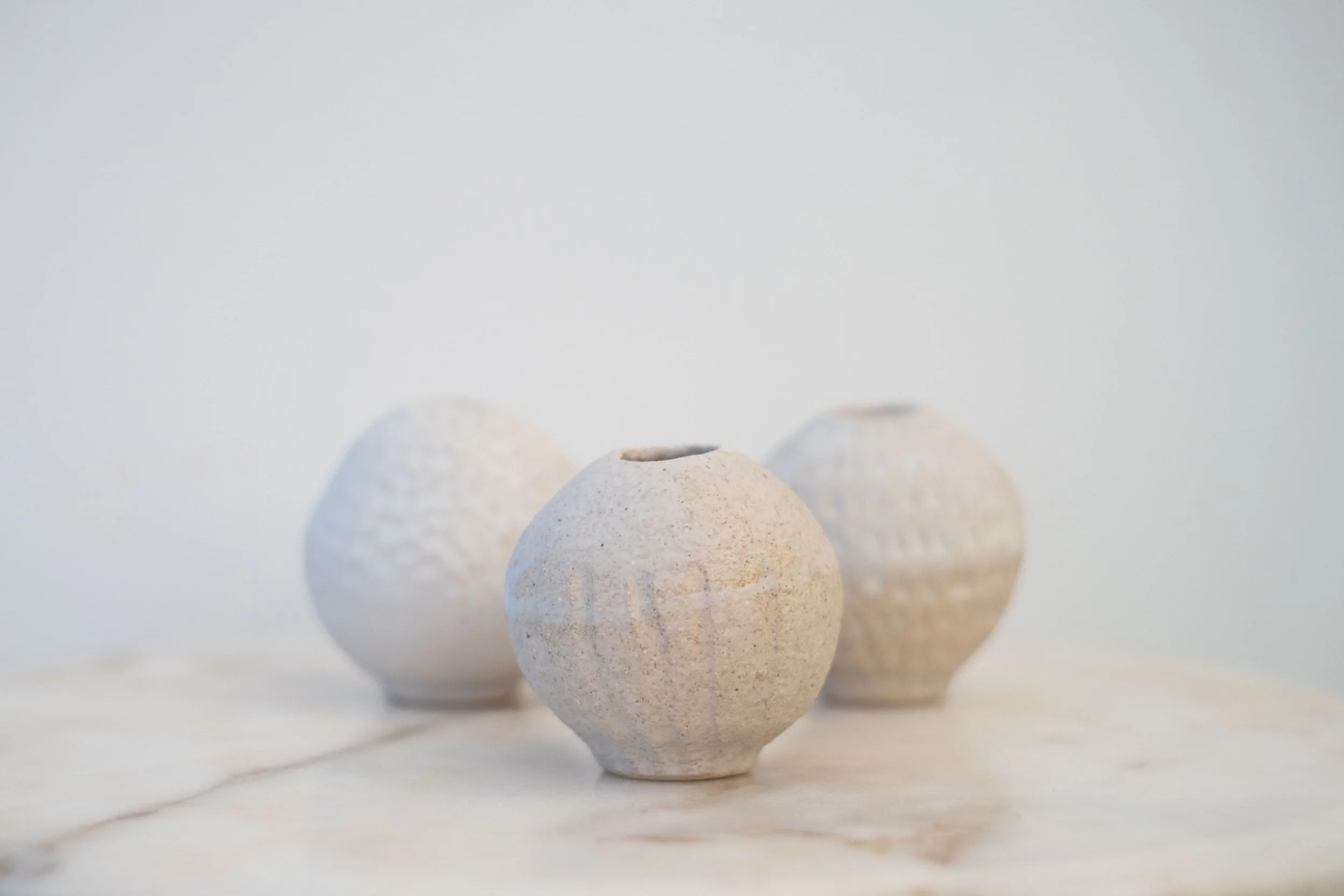
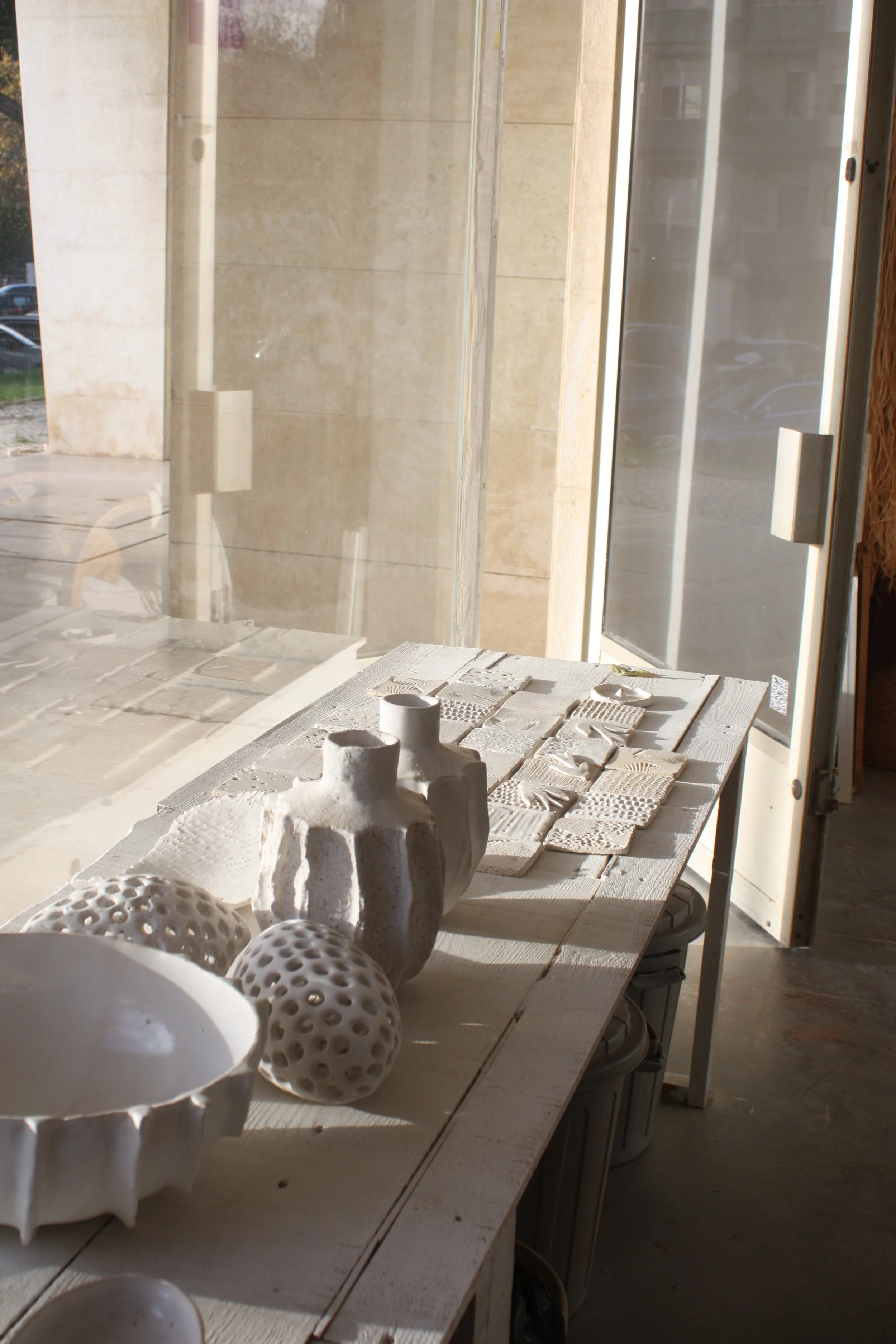
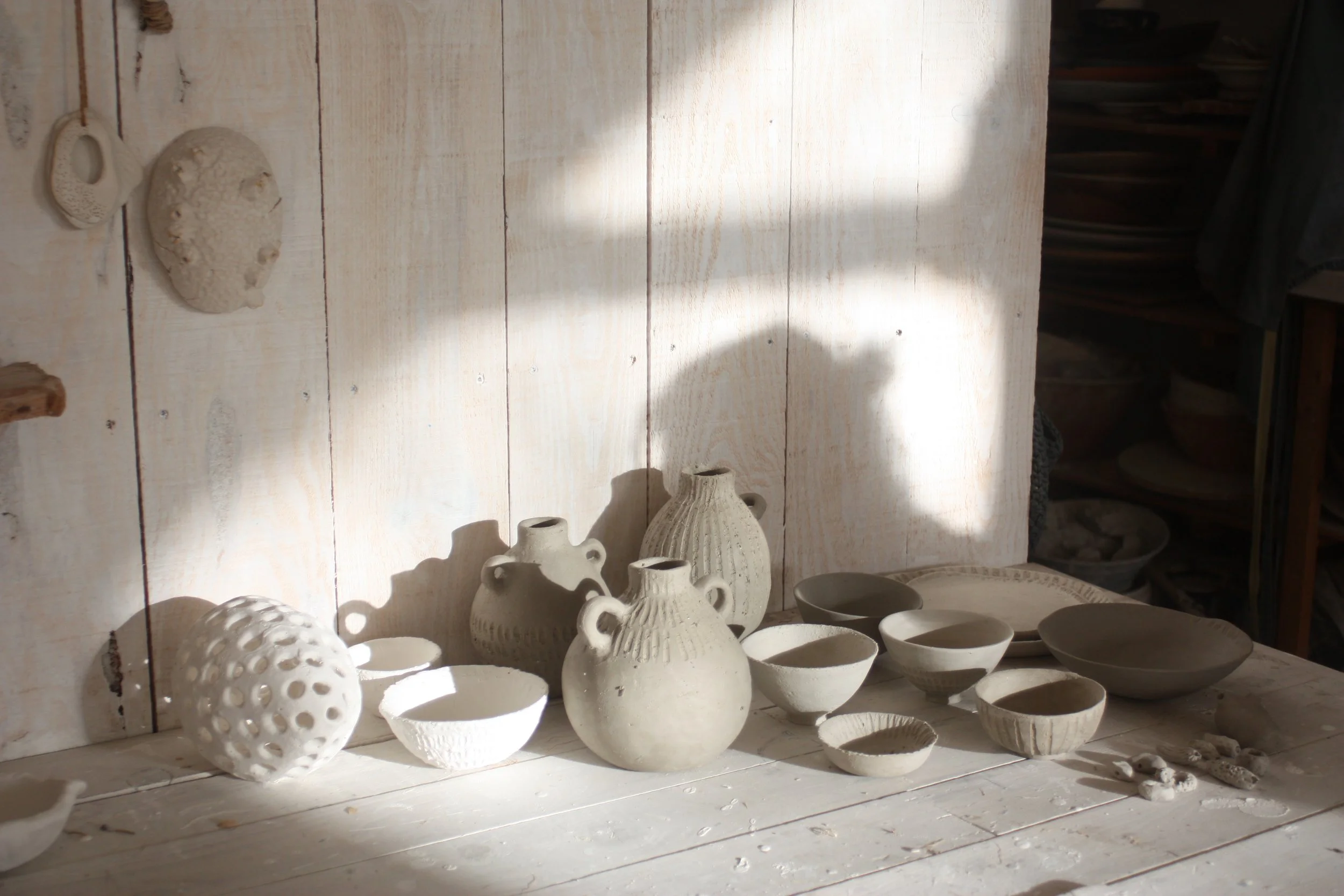
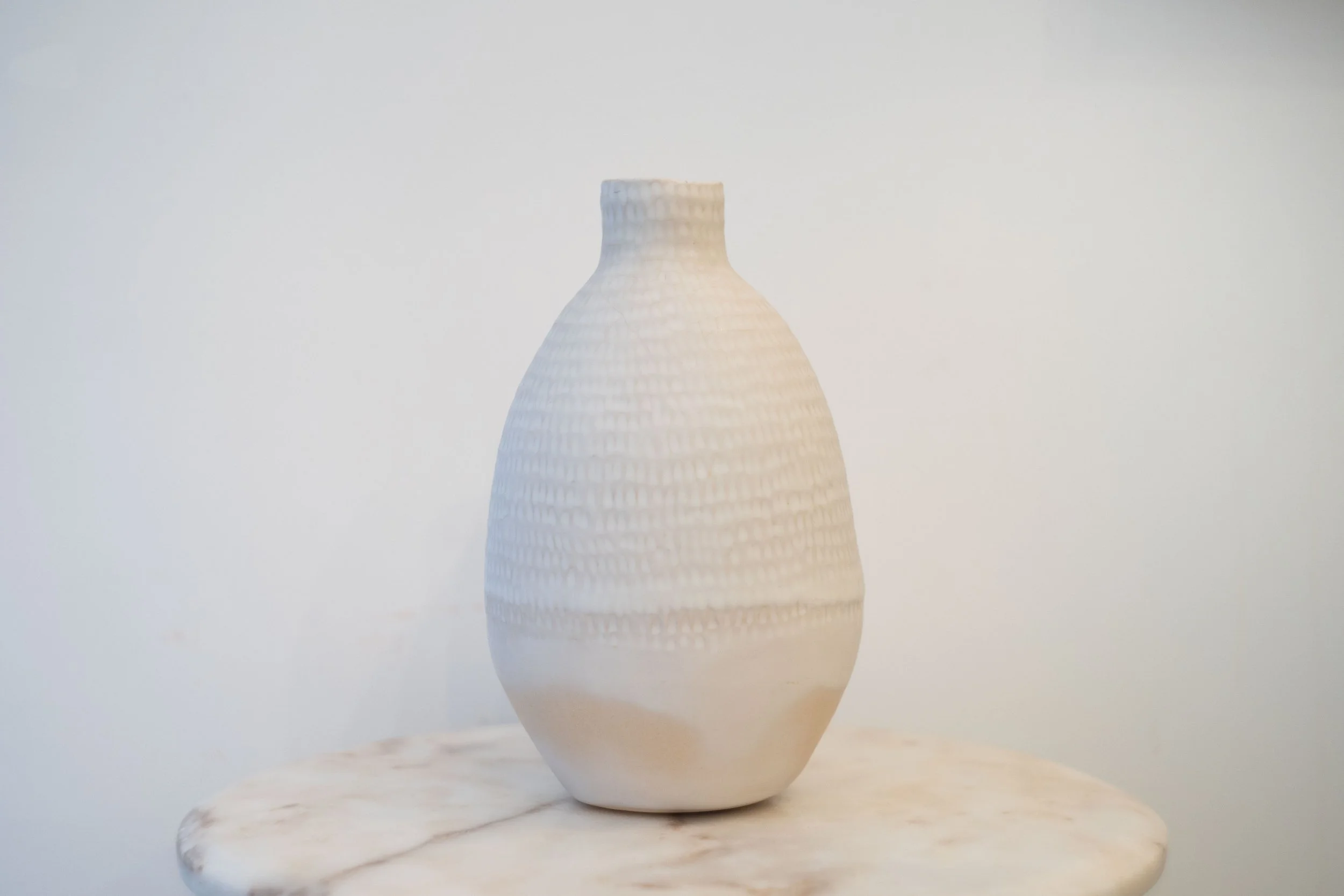
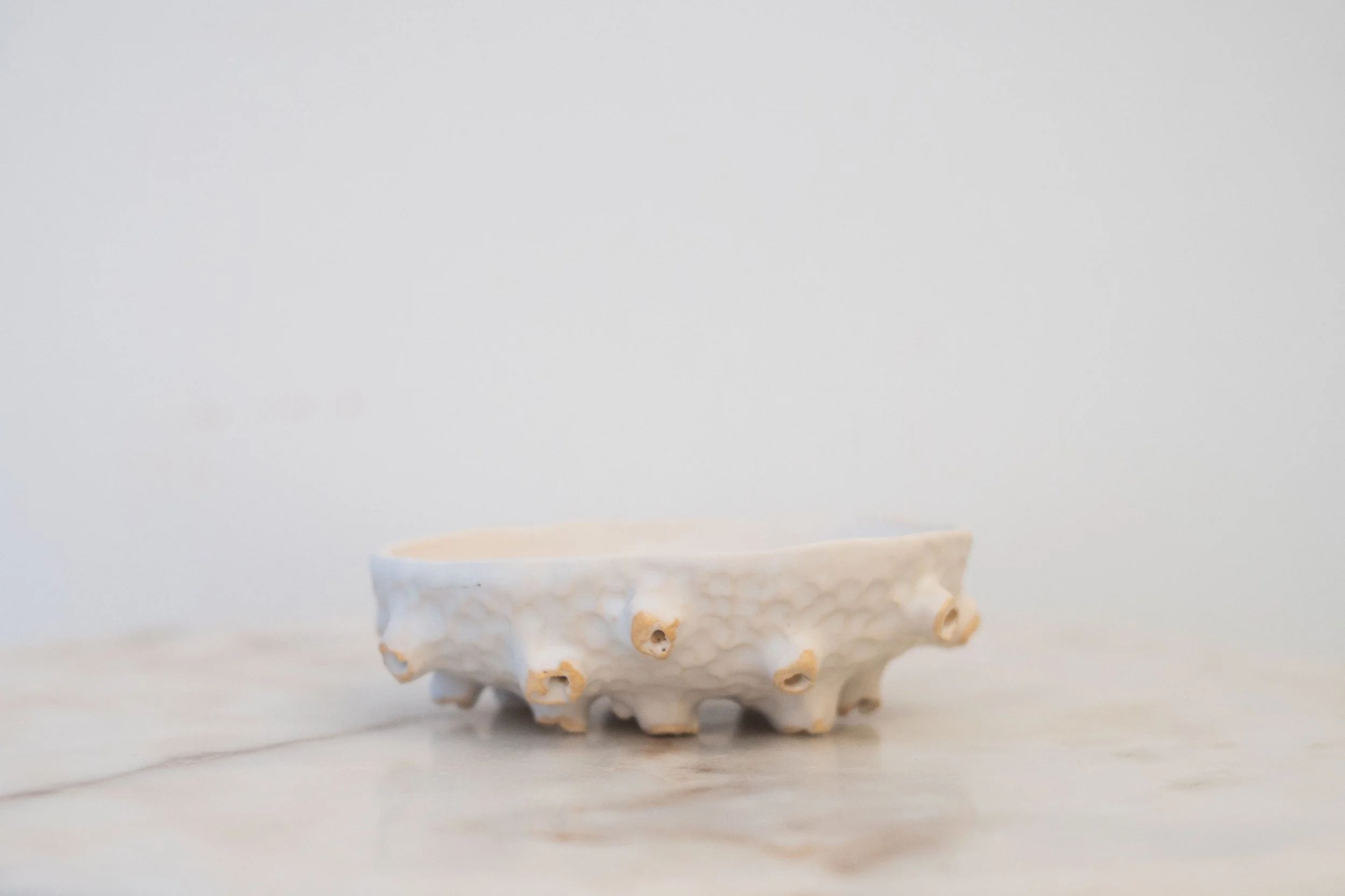
Organic elements are present in all of her pieces, whether in their form, movement, or details and textures. In the finishing, she preserves the imperfections inherent to handmade work, making each piece unique.
She works with white stoneware and various grogged clays (chamotes). For finishes, she favors white glazes and matte surfaces, exploring techniques that reveal the natural textures of different clays. Within her universe, we find seeds, berries, flowers, cocoons, pods, barnacles, and leaves—either whole or imprinted in their textures.
Her training began in fashion design, and she also studied decorative painting. For 15 years, she was a partner in a company dedicated to decorative furniture and wall painting, a period during which she continued to deepen her artistic training through the study of painting, drawing, and illustration with painter Ricardo Leite, teacher Bodil Eide, and in courses at Nextart and Ar.Co.
Later, she left the company to dedicate herself entirely to painting. She taught classes and led visual arts courses for children in her studio, an experience she holds with special affection. As she often says, children were some of her greatest teachers: their boundless imagination and the freedom with which they create taught her a great deal.
Out of painting grew the desire to explore materials with new possibilities for three-dimensional expression. She experimented with papier-mâché, moved through ceramic plaster, and ultimately found her path in ceramics. She studied for two years with ceramicist Helena Abrante, progressively dedicating herself to this field until she transformed her multidisciplinary studio into a space almost exclusively devoted to ceramics.
“I arrive at the studio without grand ideas and let the clay guide me. It’s a dialogue, it’s about feeling,” she says.
She deeply admires Eastern ceramics, the dedication placed into every object, and the respect for its life and function. Perhaps that is why utilitarian objects continue to hold such an important place in her work.